






The industrial solution of the future
Polyetheretherketone (PEEK)
PEEK (Polyetheretherketone) is a high-performance thermoplastic used in technical and industrial applications where extreme strength, high temperature resistance, low friction, and chemical resistance are required.
Polyetheretherketone (PEEK)
The material has low moisture absorption, high wear resistance and excellent dimensional stability, making it suitable for demanding environments such as the aerospace, automotive, oil and pharmaceutical industries. PEEK can replace metal in many applications.
There are several variants of PEEK:
- Ren PEEK – standardtype med høj styrke og kemikalieresistens.
- GF30 – 30 % glass fibre reinforced for extra rigidity.
- CF30 – 30 % carbon fibre reinforced for maximum strength and low thermal expansion.
- Special PEEK – low friction, anti-static, food or medical grade.

Application of Polyetheretherketone (PEEK)
PEEK is suitable for many industries and applications where the requirements for plastic components are exceptionally high.
Industrial estates
- Aerospace – due to its high strength, low weight, and resistance to temperature/chemicals, PEEK can be used as a replacement for metals in aircraft parts and aerospace components.
- The automotive industry / transport sector – for components requiring high loads, wear resistance, heat tolerance, or exposure to corrosive environments, such as gears, plain bearings, pump components, or special load-bearing plastic parts.
- Chemical Industry & Oil/Gas – PEEK tolerates aggressive chemicals, high temperatures and steam/pressure – suitable for valves, pumps, seals, pipes and down-hole components.
- Medically and food production – good biocompatibility, low gas development in case of fire, autoclavability and clean process possibilities make PEEK suitable for medical instruments, implants and food equipment.
- Electronics / semiconductors / vacuum equipment – low water absorption, stability under heat and chemicals, as well as good insulation properties make PEEK ideal for critical components.
PEEK is used for plastic components in advanced plastic processing for housings, slide bearings, gears, plates, pipes, rails, fittings, and special parts that need to perform over a long time under demanding conditions.
Properties and benefits of Polyetheretherketone (PEEK)
This paper reviews the most significant properties and design/industrial advantages of PEEK, particularly in the context of plastics processing and the production of plastic components.
Central characteristics
- Thermal resistance: PEEK can be used continuously at temperatures up to approx. 250°C.
- Mechanical strength and stiffness: High tensile strength, flexural strength, and modulus, which are retained even at high temperatures.
- Chemical resistant: Withstands aggressive chemicals, steam and water even at high temperatures.
- Sliding/friction resistance: Low coefficient of friction, good resistance to wear in moving parts, especially when filled with graphite or carbon fibre.
- Dimensional stability: Low water absorption, low thermal expansion, stable under cyclic loads → precision in design and machining.
- Flame and smoke generator resistance: PEEK can meet high fire requirements without fillers and has low toxicity during combustion.
Mechanical
- Tensile strength: 90–100 MPa
- E-modulus: 3,600–4,000 MPa
- Break extension: 10–50 %
- Hardness: Rockwell M100–R126
Thermal
- Melting point: ~343 °C
- Max. continuous operating temperature: ~250 °C
- Short-term temperature load: 300 °C
- Low thermal expansion
Electric
- Excellent insulating properties
- Dielectric strength: > 20 kV/mm
- Stable in humidity and high temperatures
Chemical resistance/hydrolysis
- Highly resistant to acids, bases, solvents and hydrocarbons
- Hydrolysis resistant → resistant to steam and hot water
- Good UV stability, can be used outdoors (depends on colour/variant)
Summary and alternatives to Polyetheretherketone (PEEK)
PEEK is a leading high-performance thermoplastic that brings advanced properties to plastic processing and the production of plastic components. Its combination of high temperature resistance, strong mechanical properties, chemical resistance, and processability makes it ideal for demanding industries such as aerospace, automotive, chemical, medical, and electronics.
Although PEEK is very competent, this material has both advantages and limitations:
Semi-finished product options for Polyetheretherketone (PEEK)
- When choosing material and process, there are many semi-finished PEEK options, which make it practical for plastic processing and the production of plastic components:
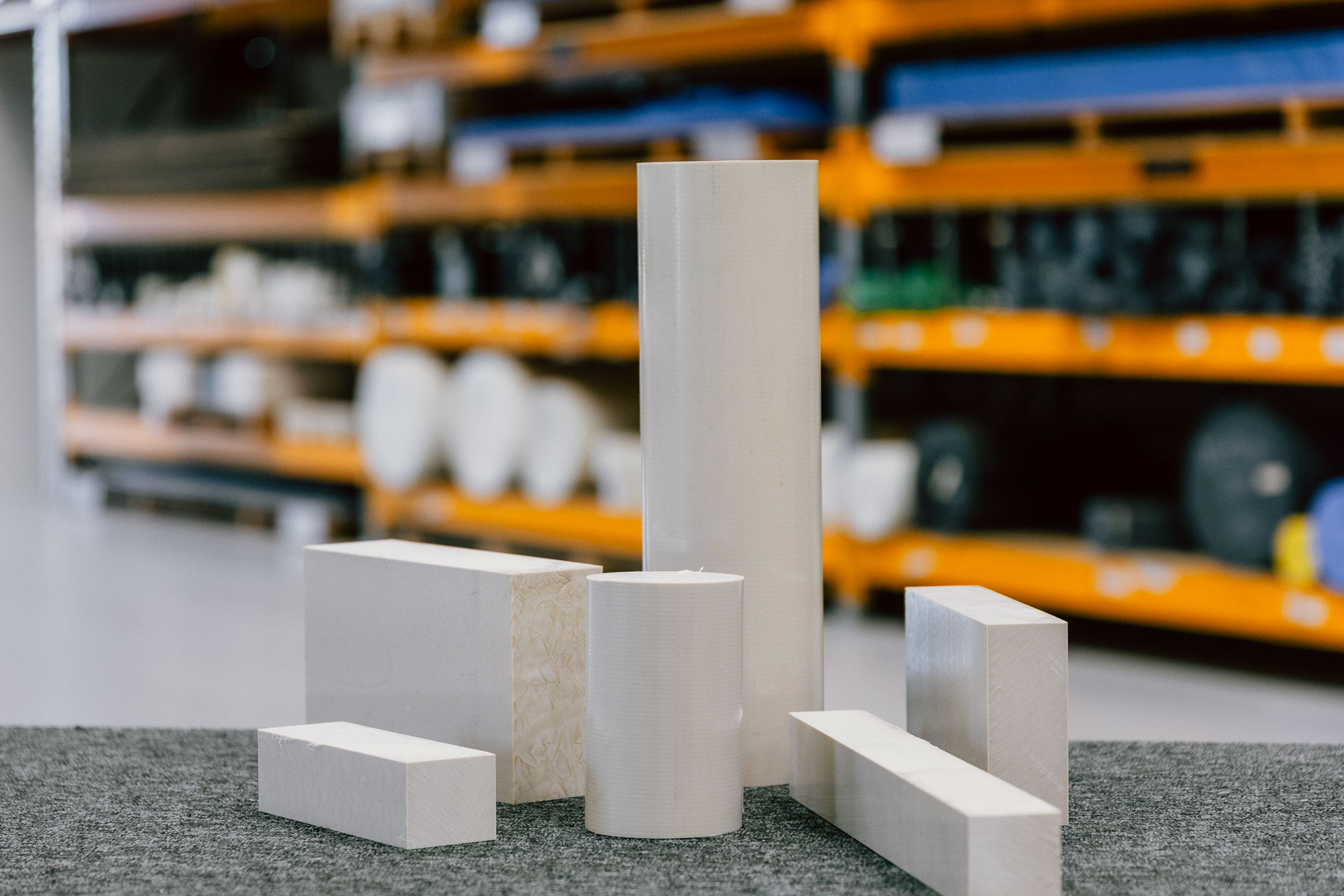
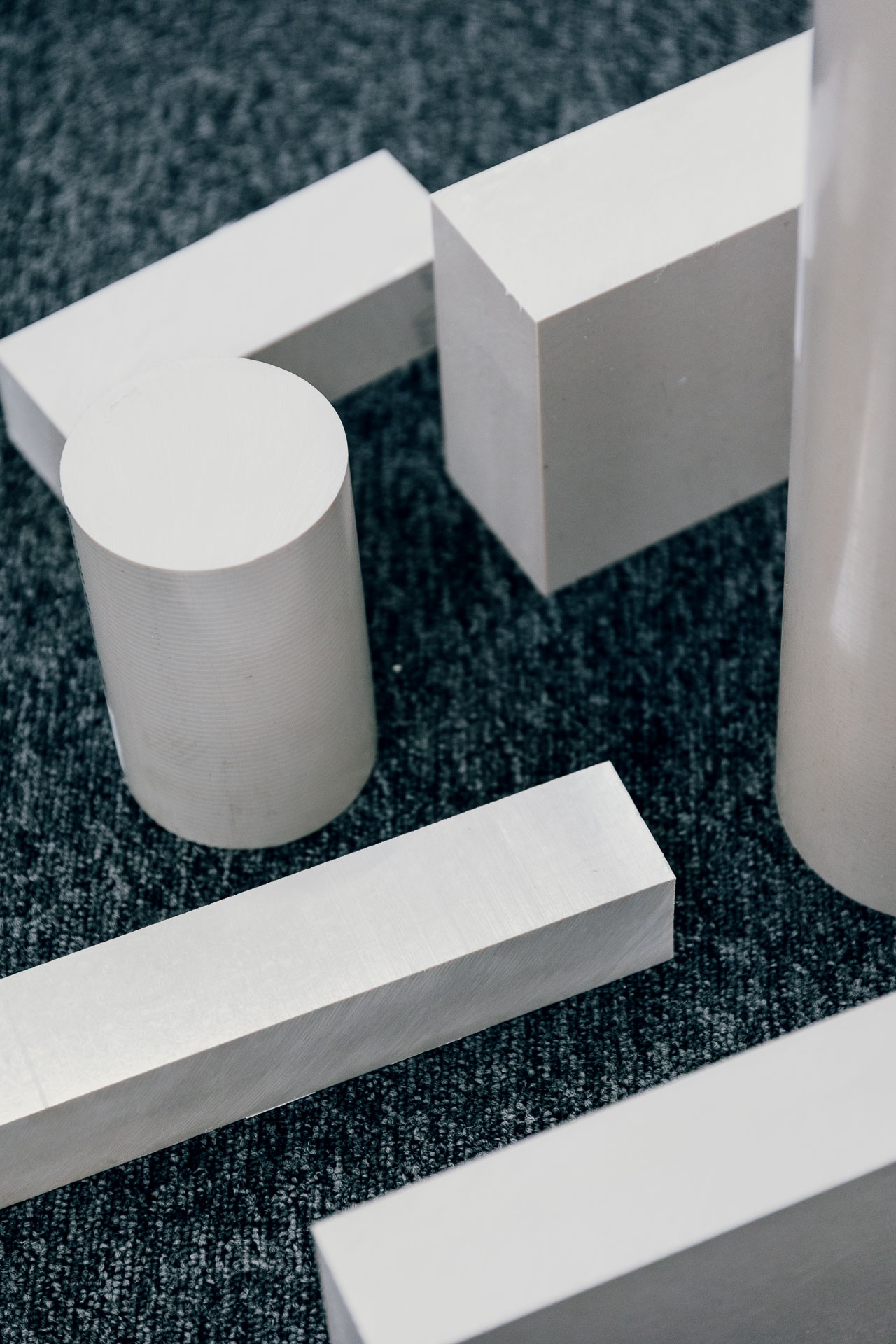
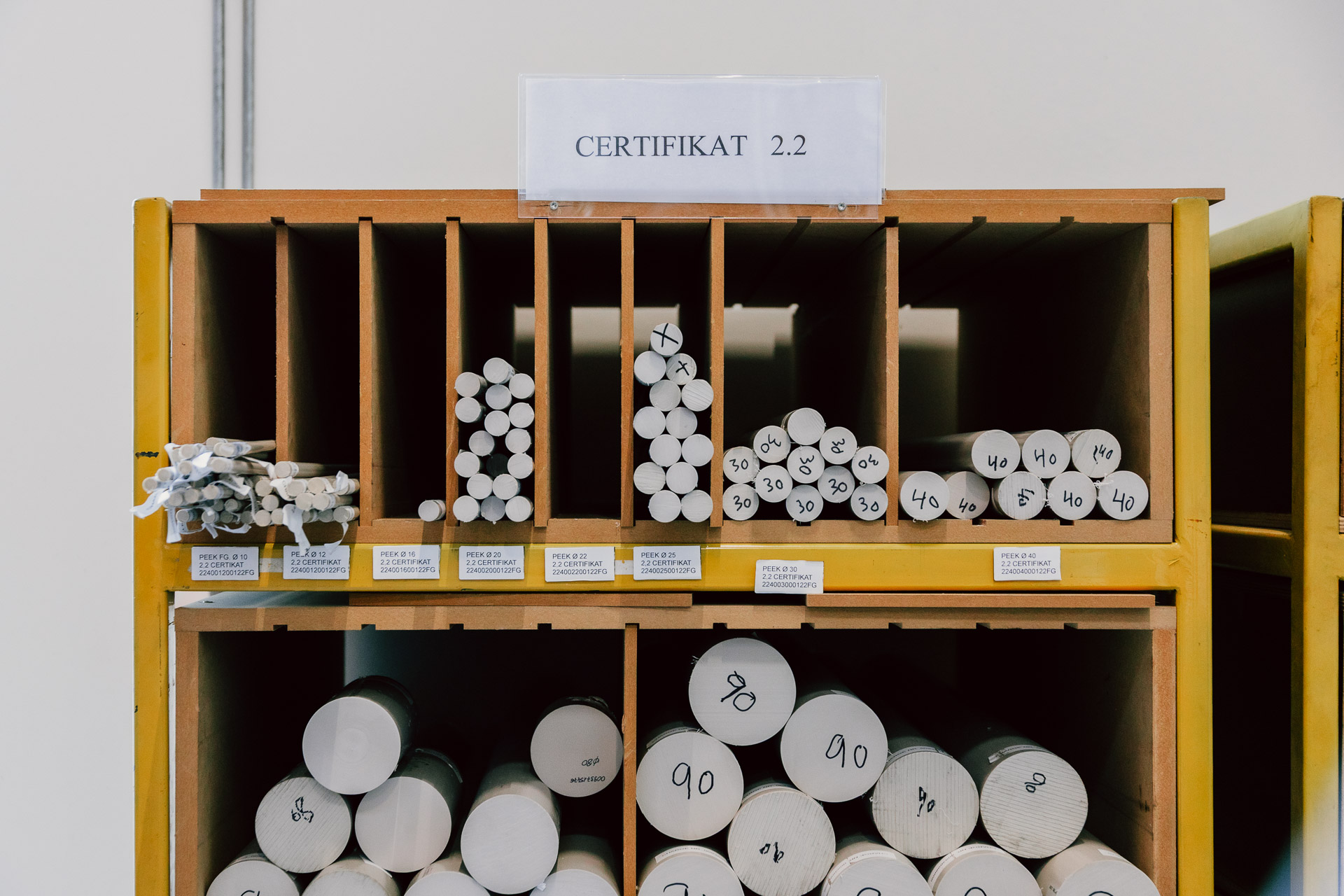
- Rods/bars: Round materials in PEEK that can be turned/milled into precision plastic components. They are available in Ø4-Ø200 mm.
- Sheets/plates: PEEK sheets, which can be cut and machined into flat plastic components or special parts. They are available in 5 – 100 mm.
- Various variants and colours: Standard, GF30, CF30, antistatic, medical grade, food grade, and available in natural/beige and black.
- The choice of semi-finished product depends on the application: how demanding is the environment (temperature/chemicals), which processing method is used, and what tolerances and mechanical requirements are specified.
Food authorisation
- PEEK is available in FDA and EU 10/2011 approved versions.
Medical PEEK Variants: ISO 10993 / ASTM F2026.
Summary and alternatives to Polyetheretherketone (PEEK)
PEEK is a leading high-performance thermoplastic that brings advanced properties to plastic processing and the production of plastic components. Its combination of high temperature resistance, strong mechanical properties, chemical resistance, and processability makes it ideal for demanding industries such as aerospace, automotive, chemical, medical, and electronics.
Although PEEK is very competent, this material has both advantages and limitations:
Benefits:
- Extreme strength and stiffness
- High temperature resistance
- Chemical-resistant and abrasion-resistant
- Low water absorption, dimensionally stable
- Can be sterilised, radiation tolerant
- Can replace metal in many applications
Limitations:
- High price
- Requires special tooling for machining
- Reduced impact strength in cold environments without reinforcement
- When choosing materials for plastic components, one should therefore weigh requirements for temperature, chemical exposure, mechanical stress, weight, lifespan, and processing options – and here, PEEK can often be the optimal choice.
Alternatives could include:
PTFE, PPS, PSU, PA, PETP – depending on requirements for wear resistance, temperature, and chemical resistance
Hvorfor er PEEK så godt?
PEEK is so good because it combines very high strength, chemical resistance, and heat resistance with low weight.
PEEK bruges til en lang række anvendelser, herunder: * **Medicinsk udstyr:** På grund af biocompatibiliteten og steriliseringsegenskaberne bruges PEEK til medicinske implantater, proteser og kirurgiske instrumenter. * **Luftfart:** Dens høje styrke, lette vægt og modstandsdygtighed over for ekstreme temperaturer gør det til et ideelt materiale til komponenter i fly og rumfartøjer. * **Bilindustrien:** PEEK bruges i bilkomponenter, der kræver høj ydeevne, såsom lejer, pakninger og motordele. * **Elektronik:** Det anvendes i elektriske isoleringsdele, stik og kontakter, da det har fremragende elektriske egenskaber og termisk stabilitet. * **Industrielt udstyr:** PEEK bruges til forskellige industrielle applikationer, herunder pumper, ventiler, filtre og sliddele.
PEEK is used for demanding plastic components in industries such as aerospace, automotive/transport, chemical/oil/gas, medical/food, and electronics/vacuum equipment. This can include bearings, gear parts, valves, seals, tubes, plates, and implants.
Is PEEK toxic plastic?
No, PEEK is not toxic. It is a high-performance technical thermoplastic which, in many cases, is also approved for medical and food applications. Even in fire situations, PEEK develops very low amounts of smoke and toxic gases.
Machining in Polyetheretherketone (PEEK)
When working with plastic processing of PEEK to produce plastic components, there are some key aspects to consider.
CNC machining (milling/turning)
- PEEK can be machined using CNC milling and turning – in sheets, rods, and as semi-finished products.
- Due to the high temperature resistance and mechanical strength, tooling choices and cutting speed parameters require special adaptation.
- When machining PEEK filled with glass/carbon fibres, one must be mindful of tool loading and chip handling.
Welding, assembly etc.
Plastic components machined from PEEK can be combined with other materials via assembly/metal inserts, offering design flexibility.
PEEK can also be joined or welded in certain cases, allowing for larger or more complex plastic components to be assembled.
Mechanical assemblies of plastic components in PEEK material enable the construction of modular solutions where standard plastics would not withstand the load or chemical environment, and this solution is clearly the best.