







The industrial solution of the future
Thermoplastic
Thermoplastics, also known as thermoplastics, are a type of plastic that can be heated, moulded and cooled repeatedly without losing its properties. This ability makes thermoplastics extremely flexible in production and plastics processing, and they are used in a wide variety of industries from medicine to machine building.
What is thermoplastic?
Plastics can be divided into three main groups:
- Thermoplastic - Can be melted and moulded several times
- Thermosetting plastic - hardens permanently and cannot be remoulded
- Elastomers - Flexible materials that return to their original shape after deformation
The recyclable and mouldable nature makes thermoplastics one of the most widely used plastics worldwide. In fact, thermoplastics account for approximately 90 % of the commercial and construction plastics used.
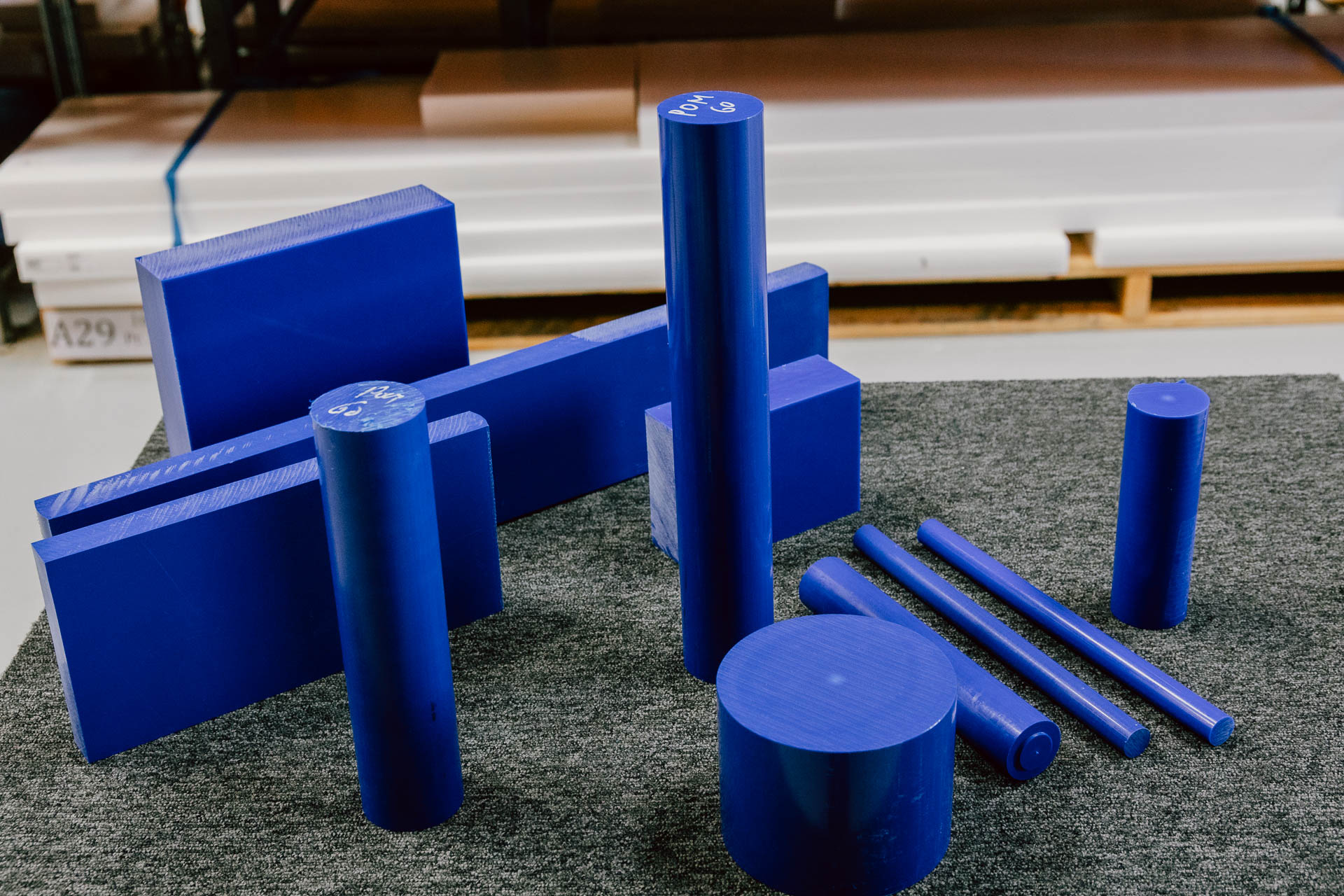
What types of thermoplastics are available?
There are many types of thermoplastics, each with unique properties and applications. The most commonly used are:
Polyethylene (PE/PEHD)
Durable and chemical resistant; suitable for logistics, food industry and packaging.
Polypropylene (PP)
Lightweight, resistant and economical; used in automotive parts, pipes and packaging.
Polyvinyl chloride (PVC)
Robust and durable; used in the construction industry, pipe and cable supply.
Polyamide (PA/Nylon)
Strong and durable; ideal for machine parts and technical components.
Polymethyl methacrylate (PMMA/acrylic)
Clear and decorative; used for signs, displays and design components.
Polycarbonate (PC)
High impact strength and heat resistant; used in electronics, optics and safety equipment.
PTFE (Teflon®)
Chemical resistant and low friction; ideal for seals and sliding parts.
ABS
Strong and mouldable; often used in electronics, toys and prototypes.
PETG/PET-P
Clear, durable and lightweight; used in packaging and plastic components.
POM (Acetal)
Dimensionally stable and durable; suitable for gears, bearings and mechanical parts.
PEEK
Low moisture absorption, high wear resistance and excellent dimensional stability. PEEK can replace metal in many applications.
PVDF
Chemical resistant, strong material and can handle high temperatures, good electrical properties.
Industries where thermoplastics are used:
Food industry
Pharmaceutical industry
Machine industry
The construction industry
Logistics and transport
Electronics and engineering
Aerospace industry
Agriculture and energy

Properties of thermoplastics
Thermoplastics are one of the most widely used materials in plastic processing due to their versatility and adaptability. Its unique properties make it possible to produce plastic components that are functional, durable and aesthetically pleasing.
Design and industrial benefits
- Complex designThermoplastics can be moulded into complex geometries, making it possible to produce detailed components without the need to assemble multiple parts.
- Lightweight designThermoplastics are lightweight compared to metals and thermosets, making them ideal for the transport and aerospace industries where weight reduction is crucial.
- Colour options and finishes: The material can be added with colour pigments, UV protection or gloss finish, making it possible to produce decorative and functional plastic components without additional finishing.
- Flexibility in productionThermoplastics can be processed in both small batches and large quantities, making the material attractive for prototypes, customised parts and mass production.
- Customisation for specific requirementsDepending on the type and additives, thermoplastics can be made impact resistant, chemical resistant, heat resistant or smooth with low friction - properties that make the material suitable for everything from medical devices to mechanical parts.
Benefits in different industries
- Pharmaceutical industry: Thermoplastics can be sterilised, have high chemical resistance and can be moulded into precise components for appliances and disposable products.
- Machine industry: The material's durability and resistance to mechanical stress make it ideal for gears, bearings and technical components.
- Food industryPE, POM and PP are food approved and can be used for packaging, conveyor belts and storage solutions where hygiene is important.
- The construction industryPVC and other rigid thermoplastics are used for pipes, window profiles and panels where durability and weather resistance are essential.
- Electronics and engineeringPC, ABS and other engineering thermoplastics combine impact resistance with electrical insulation, making them ideal for enclosures, connectors and electronic components.
General benefits
- Reusability: Thermoplastics can be remelted and recycled, reducing material waste and production costs.
- Chemical resistance: Many types of thermoplastics are resistant to acids, alkalis and solvents.
- High impact strength: Thermoplastics can withstand shock and vibration, making the material durable in both industrial and consumer applications.
- Insulating properties: Many thermoplastics have low thermal conductivity and act as electrical insulators, making them suitable for electronics and electrical components.
- Temperature customisationDepending on the type, thermoplastics can withstand low as well as moderately high temperatures, providing flexibility in different environments.
Disadvantages and limitations
- Limited heat resistanceCompared to thermosets and metal, some thermoplastics can deform at high temperatures.
- UV sensitivitySome thermoplastics such as regular PE and PP can become brittle or discoloured with prolonged exposure to sunlight unless they are UV treated.
- Long-term created strain: Under constant mechanical stress over time, some thermoplastics can show plastic deformation (creep).
- Low dimensional stiffnessFor extremely heavy mechanical use, thermoplastics cannot always replace metal or thermosets, but often combining them with fibre-filled thermoplastics can solve this problem.
In short, thermoplastics make it possible to create plastic components that combine strength, flexibility, low weight and high design freedom. The material is an optimal choice for industries that want a balance between functionality, production efficiency and aesthetics, while making plastic processing easy and economical.
Machining thermoplastics
Thermoplastics are particularly suitable for plastics processing due to their flexible and mouldable nature. The most common machining methods include:
- CNC milling and CNC turning - Precise moulding of plastic components for technical and decorative purposes
- Welding and joining - Thermoplastics can be melted and joined, creating strong joints without the use of glue
- Bending and forming - heating makes it possible to create complex shapes
- Finishing - Polishing, engraving and surface treatment for a professional and functional finish
This makes thermoplastics ideal for prototyping, customised parts and serial production in various industries.
Summary and alternatives to thermoplastics
Thermoplastic is a versatile material that combines flexibility, recyclability and strength. It is widely used in everything from technical components to design solutions and can be processed with modern CNC technology and welding methods.
Alternatives to thermoplastics:
- Thermosetting plastic - High heat resistance and rigidity, but not reusable
- Elastomers - Flexible materials for shock absorption and sealing solutions
- Metal and composite materials - when extreme strength or heat resistance is needed
When choosing a material for plastic components, it's important to balance design, function and production technology to find the optimal solution.

What is thermoplastic used for?
Thermoplastics are used for the production of plastic components in industries such as food, medicine, mechanical engineering, electronics, construction and transport. It is used for technical parts, packaging and decorative solutions.
What is the difference between thermosets and thermoplastics?
Thermoplastics can be heated and moulded repeatedly, whereas thermosets harden permanently and cannot be reshaped.
What is thermoplastic?
Thermoplastic means that a material can be melted and moulded repeatedly when heated.
Is PVC a thermoplastic?
Yes, PVC (Polyvinyl Chloride) is a type of thermoplastic that is robust, durable and suitable for many plastic processing applications.